


Losing teeth in retirement is more common than most seniors expect, and the decision about how to replace them is one of the most significant health and financial choices you will face. Dental implants are widely promoted as the gold standard solution, and for many seniors they genuinely are. But at thousands of dollars per tooth and with Medicare covering almost nothing, the decision deserves more than a dentist’s pitch. This guide gives you the honest picture on costs, health benefits, risks, and how to pay for dental implants for seniors without draining your retirement savings. Seniors managing overall retirement coverage should also review their auto insurance options alongside dental costs.
What Dental Implants Actually Are
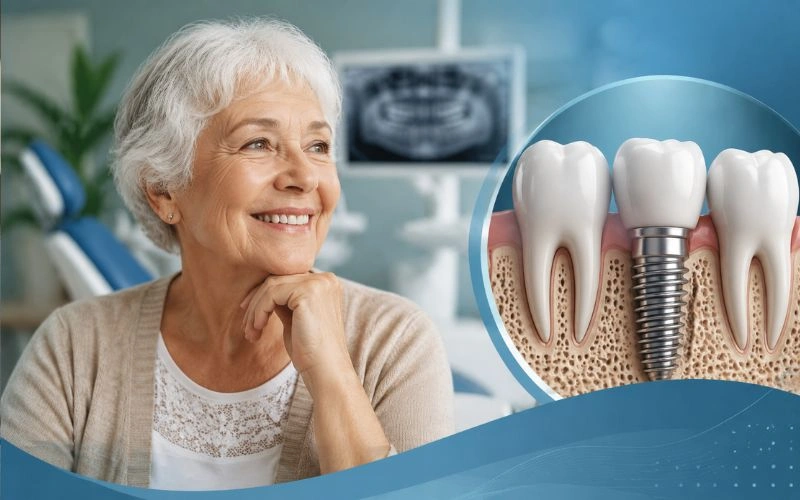
A dental implant is a titanium post surgically inserted into the jawbone to serve as an artificial tooth root. Once the post integrates with the bone over a period of several months, a crown is attached on top to create a replacement tooth that looks, feels, and functions like a natural one.

Unlike dentures, which sit on top of the gum and can slip or require adhesive, implants are fixed permanently in place. Unlike bridges, which require grinding down adjacent healthy teeth for support, implants are self-supporting and do not affect neighbouring teeth. For seniors who want a long-term, low-maintenance solution, the clinical case for implants is genuinely strong.
A complete dental implant has three parts: the titanium post inserted into the jawbone, the abutment that connects the post to the crown, and the crown itself which is the visible tooth replacement. Each component adds to the total cost, and each can be provided by different specialists at different price points.
What Dental Implants Cost for Seniors in 2026
Cost is the single biggest barrier for most seniors considering dental implants, and the numbers are significant. Here is a realistic breakdown:
These figures represent averages and can vary significantly based on your location, the complexity of your case, whether bone grafting is needed, and the experience level of the implant specialist. Urban areas and specialist clinics typically charge more than general dentists or dental schools.
Dental schools accredited by the American Dental Association offer implant procedures performed by supervised dental students at significantly reduced rates, often 40 to 60 percent below private practice prices. The procedures take longer but the clinical standards are closely monitored.
Does Medicare Cover Dental Implants for Seniors
This is the question almost every senior asks first, and the answer is largely disappointing. Original Medicare Parts A and B do not cover routine dental care, which includes dental implants, extractions, dentures, or cleanings. There are very narrow exceptions for dental work that is directly connected to a covered medical procedure, such as jaw reconstruction after an injury, but these rarely apply to standard implant cases.
Medicare Advantage plans, also known as Part C, have more flexibility. Many Medicare Advantage plans include some level of dental coverage as a supplemental benefit, but the extent varies enormously between plans. Some cover only basic preventive care. Others offer a dental benefit allowance of $1,000 to $2,500 per year that can be applied toward implant work. Very few cover the full cost of implants.
Do not assume your Medicare Advantage dental benefit covers implants. Many plans specifically exclude implants or classify them as cosmetic. Read the Evidence of Coverage document for your specific plan and call member services to confirm what is and is not covered before proceeding with treatment.
Health Benefits That Go Beyond the Smile
The case for dental implants for seniors extends well beyond aesthetics. Several health outcomes improve meaningfully with implants compared to dentures or leaving gaps untreated:
- Bone preservation When a tooth root is lost, the jawbone beneath it begins to deteriorate through a process called resorption. Implants stimulate the bone the way natural roots do, slowing or preventing this bone loss
- Nutrition and digestion Missing teeth or poorly fitting dentures make it difficult to chew hard or fibrous foods, often leading seniors to avoid fruits, vegetables, and proteins. Implants restore full chewing function and support better nutritional intake
- Speech clarity Gaps and ill-fitting dentures can affect pronunciation. Fixed implants eliminate the slipping and movement that disrupts speech
- Adjacent tooth protection Gaps left by missing teeth allow neighbouring teeth to shift, creating bite problems and additional decay risk. Implants hold surrounding teeth in their correct positions
- Mental health and confidence Multiple studies link tooth loss in older adults to reduced social engagement, depression, and lower self-reported quality of life. Restoring a complete smile has documented positive effects on confidence and wellbeing
Are Seniors Good Candidates for Dental Implants
Age alone is not a disqualifying factor for dental implants. Seniors in their 70s and 80s successfully receive implants every day. What matters more than age is overall health status and bone density.
Candidates need sufficient jawbone density to support the implant post. Seniors who have had missing teeth for many years may have experienced significant bone loss that requires grafting before implant placement, which adds cost and healing time. Uncontrolled diabetes, blood thinners, bisphosphonate medications for osteoporosis, and a history of radiation therapy to the jaw are all factors that complicate implant candidacy and must be disclosed to your dentist before proceeding.
Good Candidates
- Adequate jawbone density or willingness to graft
- Non-smokers or those willing to quit during healing
- Well-controlled diabetes and blood pressure
- Good overall oral hygiene habits
- Committed to follow-up care and maintenance
Higher Risk Factors
- Significant bone loss requiring extensive grafting
- Active smoking which impairs healing
- Uncontrolled diabetes or immune conditions
- Bisphosphonate medication use for osteoporosis
- History of jaw radiation therapy
Ways Seniors Can Reduce the Cost of Dental Implants
- Enrol in a Medicare Advantage plan with a meaningful dental benefit before treatment begins
- Use a standalone dental insurance plan that includes implant coverage after a waiting period
- Seek treatment at an accredited dental school for supervised low-cost procedures
- Ask about dental discount plans which are not insurance but offer negotiated rates with participating dentists
- Inquire about in-house payment plans or third-party financing through providers like CareCredit
- Get multiple quotes from at least three providers including a general dentist, oral surgeon, and periodontist
Implants vs Dentures vs Bridges: The Honest Comparison
Dental implants are not the right answer for every senior. The decision depends on your health, your budget, and how many teeth need replacing. Here is an honest comparison of the three main options:
- Dental implants Highest upfront cost but longest lifespan, often 20 or more years with proper care. Best for overall oral health outcomes. Require surgery and adequate bone density
- Fixed bridges Less expensive than implants for replacing one or two teeth. Require grinding down healthy adjacent teeth and do not prevent bone loss beneath the gap. Lifespan typically 10 to 15 years
- Removable dentures Lowest upfront cost and suitable for full arch replacement. Can slip, affect taste and speech, require adhesive, and accelerate bone loss over time. Require replacement every 5 to 10 years as jaw shape changes
For seniors replacing a single tooth with good bone density and adequate budget, an implant is almost always the superior long-term choice. For seniors needing full mouth restoration on a limited budget, implant-supported overdentures, which use two to four implants to anchor a full denture, offer a middle ground that improves stability and slows bone loss at a lower total cost than full arch implants.
Questions to Ask Your Dentist Before Proceeding
Your Pre-Treatment Checklist
- Am I a good candidate based on my bone density and health history, and have you reviewed all my current medications?
- Will I need bone grafting and if so what does that add to the total cost and timeline?
- What is the complete all-in price including the post, abutment, crown, and any preparatory work?
- How many implant procedures have you personally performed and can I see before and after cases?
- What is the warranty or guarantee on the implant and crown work?
- What payment plans or financing options do you offer for seniors on fixed incomes?
The Bottom Line
Dental implants for seniors represent a significant investment that pays genuine dividends in health, nutrition, confidence, and quality of life when the right candidate receives them. The cost is real and Medicare coverage is limited, but there are legitimate ways to reduce the financial burden if you plan ahead. Seniors who travel frequently should also ensure their travel insurance covers dental emergencies abroad. Read the independent Trawick Travel Insurance review to see how travel health and dental emergency coverage works for seniors on the move. retirement finances alongside dental costs should also review their home insurance options including AARP Homeowners Insurance and AAA Homeowners Insurance to make sure all bases are covered. If you travel seasonally and need coverage in two states, also check what snowbirds get wrong about travel insurance and whether your roadside assistance plan holds up away from home.
